Cart
0
You may also like


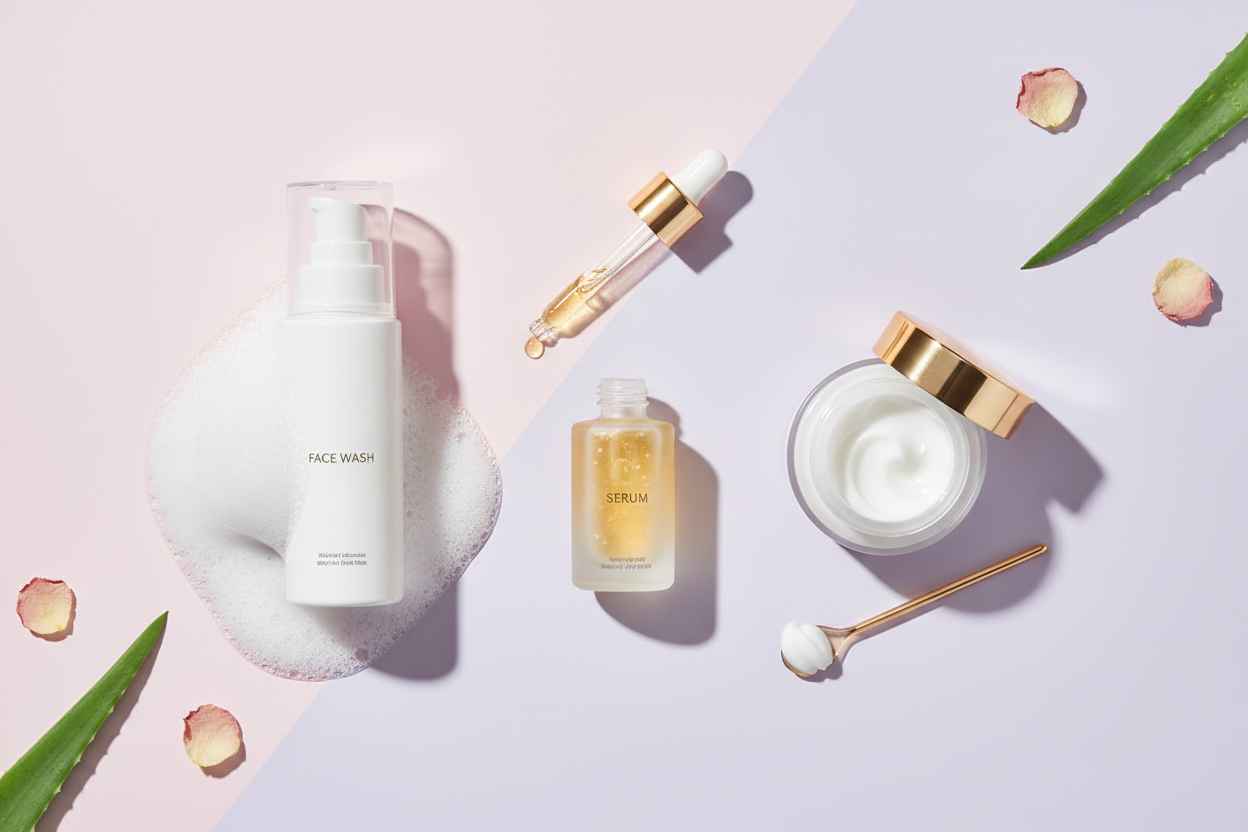
You buy a face wash. Someone tells you serums are life-changing. Then you read that skipping moisturizer is ruining your skin. Now you're standing in front of a shelf of products, confused and slightly overwhelmed.
You're not alone. This is one of the most common skincare struggles, especially for beginners trying to build a routine that actually works. The face wash vs serum vs moisturizer debate doesn't have to be complicated.
Here's what this guide covers: what each product actually does, how they differ, which ones your skin type truly needs, a simple beginner-friendly routine, and the mistakes that could be quietly sabotaging your skin. Let's break it down clearly.
A face wash is your skin's daily reset button. Its job is simple: remove dirt, excess oil, sweat, sunscreen, and pollution from the surface of your skin.
In a city like Karachi or Lahore, where heat, humidity, and dust hit your face all day, cleansing isn't optional. It's foundational. Without it, everything else you apply sits on top of grime and works less effectively.
Use face wash twice a day — morning and night. At night, it clears the buildup of the day. In the morning, it removes sweat and oil that accumulated overnight.
Washing more than twice a day (strips the skin's natural barrier)
Using hot water (causes dryness and irritation)
Rubbing the skin roughly instead of gentle, circular motions
If you have oily or acne-prone skin, look for a face wash containing salicylic acid — a beta-hydroxy acid that penetrates pores and helps reduce blackheads and breakouts. For dry or sensitive skin, a gentle, fragrance-free formula works better.
A serum is a concentrated treatment product. It's thinner than a moisturizer and designed to deliver active ingredients deep into the skin. Think of it as the targeted solution in your routine.
While face wash cleans and moisturizer protects, a serum treats — whether that's brightening, reducing acne, fading dark spots, or hydrating at a deeper level.
Hyaluronic acid — draws water into the skin, great for hydration and plumping
Niacinamide — reduces pores, controls oil, and helps even out skin tone (excellent for South Asian skin dealing with pigmentation)
Salicylic acid — in serum form, it helps with active acne and congestion
If you have a specific skin concern — hyperpigmentation, persistent dryness, acne, or dullness — a serum is worth adding. It's optional for someone with no major concerns who just wants basic healthy skin. For acne skincare basics, a niacinamide or salicylic acid serum can make a real difference.
Results may vary depending on skin type and consistency of use. Always patch test a new serum on a small area before full application.
A moisturizer hydrates, seals, and protects the outer layer of your skin, known as the skin barrier. It locks in moisture and keeps irritants from getting in.
One of the most stubborn myths in skincare? That oily skin doesn't need a moisturizer. This is wrong. When you skip moisturizer, your skin compensates by producing more oil — making oiliness worse, not better.
Glycerin — a humectant that pulls water into the skin
Ceramides — fatty molecules that repair and strengthen the skin barrier
Shea butter or squalane — richer options for very dry or winter-damaged skin
If you have dry skin in winter (a common experience across northern Pakistan and mountainous regions), look for these ingredients specifically.
For oily skin routine needs, a lightweight, water-based gel moisturizer with glycerin or hyaluronic acid gives hydration without heaviness.
Here's how these three products stack up by function:
|
Product |
Purpose |
Skin Layer |
When to Use |
|
Face Wash |
Cleanses the skin surface |
Outer layer |
Before applying anything else |
|
Serum |
Treats a specific skin concern |
Deeper skin layers |
After cleansing, before moisturizer |
|
Moisturizer |
Hydrates and protects the barrier |
Skin surface and barrier |
Last step (before SPF in morning) |
They don't compete. They work in sequence.
Not everyone does. Here's a skin-type guide to help you decide:
Oily skin: Face wash (non-foaming or salicylic acid-based) + lightweight moisturizer. Add a niacinamide serum if pores and shine are concerns.
Dry skin: Gentle creamy face wash + a hydrating serum (hyaluronic acid) + a richer moisturizer with ceramides.
Combination skin: Balanced gel cleanser + a lightweight moisturizer. A serum is optional depending on concerns.
Acne-prone skin: Salicylic acid face wash + niacinamide serum + non-comedogenic moisturizer. This is the core of acne skincare basics.
If you're just starting out, begin with a face wash and moisturizer. Add a serum once your skin has adjusted and you've identified a specific concern to address.
This is as simple as it gets — a beginner-friendly approach to skincare routine Pakistan conditions (heat, dust, humidity, and seasonal shifts).
Gentle face wash (lukewarm water)
Serum (optional — apply to damp skin)
Lightweight moisturizer
Sunscreen SPF 30+ (non-negotiable)
Face wash to remove the day's pollution and sweat
Serum (actives like niacinamide or hyaluronic acid work well at night)
Moisturizer (can be slightly richer than your daytime one)
Just face wash + moisturizer. That's a complete, effective routine. You don't need ten products to have healthy skin.
Over-washing: Cleansing more than twice strips natural oils and disrupts the skin barrier.
Skipping moisturizer: Even in summer, oily skin needs hydration.
Layering too many actives too soon: Using salicylic acid, retinol, and vitamin C all at once can cause irritation. Introduce one new product at a time.
Not knowing your skin type: Using a heavy moisturizer on oily skin or a stripping face wash on dry skin will worsen both.
Expecting overnight results: Consistent use over 4–8 weeks is where real change happens.
Can I use serum without moisturizer?
Technically yes, but it's not ideal. Serums treat; moisturizers protect. Skipping moisturizer leaves your skin exposed and can reduce how well the serum works.
Is face wash enough for skincare?
It's a great start, but face wash only cleans. It doesn't hydrate or treat. Pairing it with a moisturizer gives you a complete basic routine.
What should I apply first?
Always cleanse first, then serum, then moisturizer. Lightest to heaviest consistency.
How often should I wash my face in hot weather?
Stick to twice a day — morning and night. If you sweat heavily midday, rinse with plain water only.
Can skincare products cause acne?
Yes. Heavy, pore-clogging ingredients can trigger breakouts. Look for "non-comedogenic" on labels if you're acne-prone.
How long before I see results?
Most products need 4–8 weeks of consistent daily use before visible changes appear.
Should I patch test every new product?
Yes, always. Apply a small amount on your inner arm or behind your ear and wait 24–48 hours before using it on your face.
The face wash vs serum vs moisturizer question doesn't have one universal answer — it depends on your skin type, climate, and concerns. But the foundation is the same for everyone: cleanse, treat (if needed), and protect.
You don't need the most expensive products. You need the right ones, used consistently.
Start with a face wash and moisturizer. Learn your skin. Add a serum when you're ready. Keep it simple, be patient, and let your skin adjust.
Which product are you going to try first?