Cart
0
You may also like


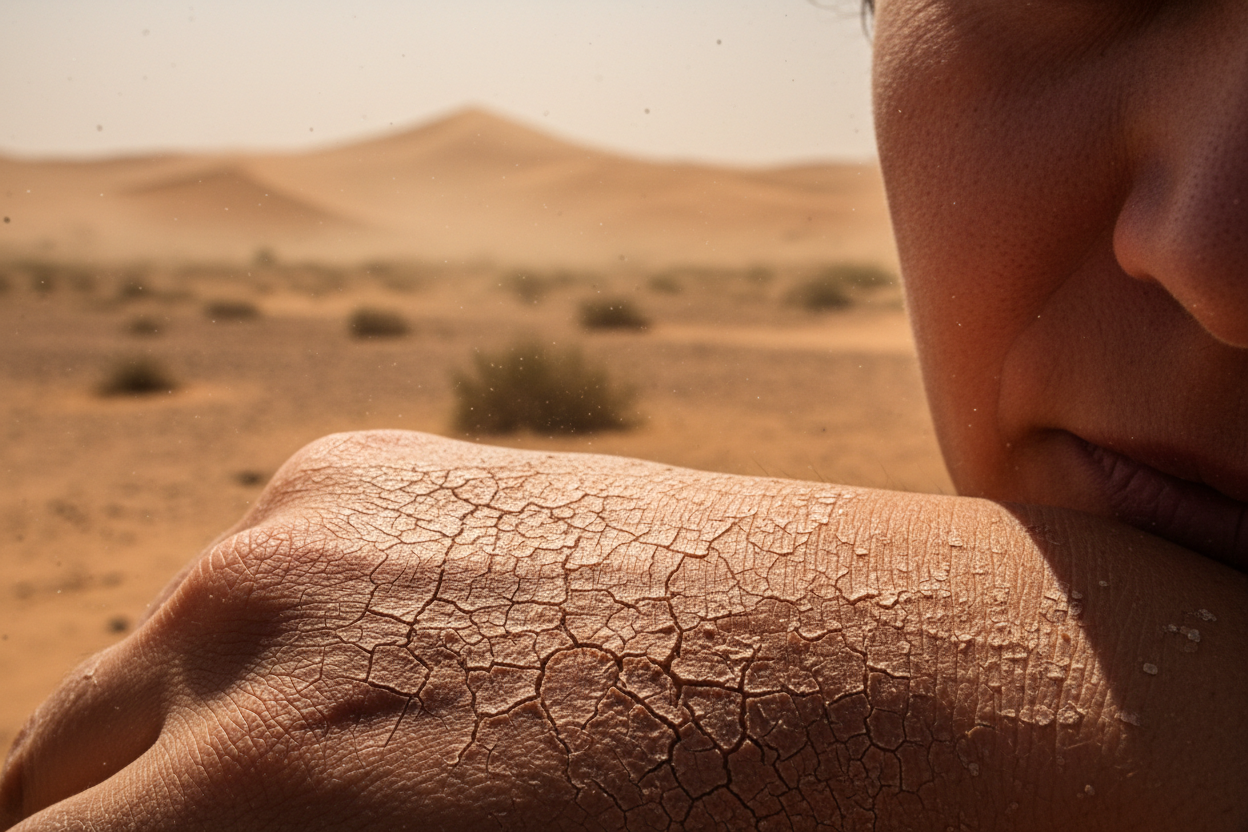
If you live in Pakistan, you already know how extreme the weather can get. Scorching summers in Multan, freezing dry winters in Islamabad, dusty winds sweeping through Lahore, humid coastal heat in Karachi — your skin is constantly fighting a battle it didn't sign up for. And for many people, the result is the same: tight, flaky, irritated, and stubbornly dry skin.
Dry skin in Pakistan is not just a seasonal inconvenience. It's a year-round skin health issue that's getting worse as urban pollution increases, water quality declines, and harsh skincare habits remain widespread. The root of the problem, more often than not, is a damaged skin barrier. Once you understand what that means and what's causing it, fixing it becomes a lot more straightforward.
Think of your skin barrier as a protective wall. It's the outermost layer of your skin, made up of skin cells and natural fats called lipids. Its job is simple but critical: keep moisture in and keep irritants out.
When your skin barrier is healthy, your skin feels soft, stays hydrated, and doesn't react aggressively to products or weather. When it's damaged, moisture escapes easily, and pollutants, bacteria, and allergens get in. The result? Dryness, flaking, redness, itching, and sensitivity.
Ceramides, cholesterol, and fatty acids are the main building blocks of this barrier. When these get depleted, the wall starts to crack — quite literally.
The weather effects on skin in Pakistan are more varied and more damaging than most people realize. Here's what's actually happening at each season and environment level.
Pakistan's summers are brutal. Temperatures regularly hit 40–50°C in cities like Lahore, Multan, and Jacobabad. Prolonged heat causes your skin to sweat excessively, disrupting the natural pH balance and depleting surface moisture faster than it can be replenished.
UV radiation is the bigger concern. Pakistan receives intense solar radiation for most of the year, and unprotected sun exposure breaks down collagen and directly damages skin barrier lipids. Over time, this leads to increased transepidermal water loss (TEWL) — a term that simply means your skin is losing moisture through evaporation faster than normal. The result is chronic dryness even in humid conditions.
Northern Pakistan — think Islamabad, Peshawar, and the hill stations — experiences cold, dry winters. Cold air holds less moisture, and indoor heating (gas heaters, electric heaters) strips even more humidity from the air. This creates the perfect environment for skin barrier damage.
When the air is dry, it pulls moisture directly from your skin. Without adequate lipids and hydration to compensate, the barrier weakens, skin becomes tight and flaky, and even mild skincare products can cause stinging or irritation.
Lahore consistently ranks among the most polluted cities in the world, particularly in winter when smog settles in. But Karachi, Faisalabad, and Peshawar face their own air quality challenges through dust storms, vehicular emissions, and industrial pollution.
Fine particulate matter from pollution penetrates the skin surface and triggers low-grade inflammation. This inflammation breaks down ceramides in the skin barrier, leading to skin barrier damage over time. Dust particles also dehydrate the skin and clog pores, making dryness worse and increasing sensitivity.
This one often gets overlooked. Much of Pakistan's urban water supply is classified as "hard water" — meaning it has high mineral content, particularly calcium and magnesium. Washing your face with hard water leaves mineral deposits on the skin that disrupt its natural pH and damage the lipid layer. Regular exposure to hard water is a known contributor to dry, sensitive skin, and it's a daily reality for most people in cities like Faisalabad, Multan, and parts of Karachi.
Recognizing skin barrier damage early can prevent a lot of unnecessary suffering. Watch for these signs:
Tightness after washing your face, even with mild cleansers
Flaking or peeling skin, especially around the nose, forehead, and cheeks
Persistent itchiness that doesn't go away with basic moisturizing
Redness or blotchiness, particularly after exposure to sun or pollution
Breakouts from dehydration — when your barrier is compromised, skin overproduces oil to compensate, leading to clogged pores
Increased product sensitivity — stinging, burning, or reactions to products you previously tolerated fine
Many people make these mistakes without realizing the damage they cause:
Over-washing the face. Washing more than twice a day, especially with soap, strips away the skin's natural oils and weakens the barrier. This is extremely common in Pakistan due to heat and sweat.
Using harsh soaps and desi sabun. Bar soaps, particularly traditional ones, have an alkaline pH that destroys the slightly acidic environment your skin barrier needs to function. Switching to a pH-balanced cleanser makes a significant difference.
Skipping moisturizer in humid weather. Many people assume that if it's hot and muggy (hello, Karachi summers), they don't need to moisturize. They're wrong. Humidity doesn't mean your skin is hydrated — it still loses moisture, and the barrier still needs support.
Ignoring sunscreen. This is arguably the most damaging habit. Daily SPF use is non-negotiable in Pakistan, yet many people skip it entirely or only use it at the beach. UV damage is happening every single day, even on overcast days.
Using random whitening creams. Pakistan's market is flooded with whitening creams that often contain skin-thinning agents, mercury, or harsh bleaching chemicals. These products directly destroy the skin barrier over time while creating the illusion of brightness short-term.
A consistent skincare routine Pakistan residents can follow doesn't need to be complicated or expensive. It just needs to be right.
Gentle, pH-balanced cleanser — Look for sulfate-free formulas. Avoid foam cleansers that leave skin feeling squeaky-clean; that's a sign of over-stripping.
Hydrating toner or essence — Choose one with glycerin or hyaluronic acid to draw moisture into the skin.
Lightweight moisturizer with ceramides — Ceramides directly repair the skin barrier. A gel-cream texture works well in humid Pakistani summers; a richer cream is better for dry northern winters.
Broad-spectrum SPF 30–50 — Every morning, every day, indoors or outdoors. This is non-negotiable.
Gentle cleanser to remove pollution, sweat, and sunscreen buildup.
Niacinamide serum — This ingredient reduces inflammation, strengthens the skin barrier, and helps regulate sebum. It's ideal for the mixed skin concerns common in Pakistan.
Moisturizer with hyaluronic acid and ceramides — At night, your skin is in repair mode. Give it the ingredients it needs. Hyaluronic acid attracts moisture; ceramides seal it in.
Use a gentle hydrating mask once or twice a week.
Avoid physical scrubs on already-dry or sensitive skin — they worsen barrier damage.
Skincare products only go so far. Your daily habits matter just as much.
Drink more water. A straightforward but genuinely impactful habit. Most Pakistanis are chronically under-hydrated, especially in summer. Aim for at least 8–10 glasses daily.
Eat hydrating, barrier-supportive foods. Local options like dahi (yogurt), almonds, makkai (corn), and foods rich in omega-3 fatty acids support skin from within. Reduce excessive chai consumption — caffeine can dehydrate skin.
Add indoor humidity. If you live in a dry climate zone or use heaters in winter, a small humidifier in your bedroom can noticeably improve skin hydration overnight.
Wash your face after pollution exposure. Coming home from a smog-heavy commute in Lahore or a dusty day in Karachi? Cleanse promptly to remove particulate matter before it sits on the skin too long.
Avoid peak sun hours. Between 10 AM and 3 PM, UV intensity in Pakistan is at its highest. Seek shade, use an umbrella, and always pair it with your sunscreen.
Weather in Pakistan is tough on skin — and that's not an exaggeration. Between extreme heat, UV exposure, dry winters, dust, urban pollution, and hard water, your skin barrier is under constant attack. Dry skin in Pakistan is often not just about what you're not putting on your skin, but about all the external forces working against it every day.
The good news is that skin barrier damage is reversible with the right approach. A simple, consistent skincare routine using ceramides, hyaluronic acid, glycerin, and niacinamide — combined with SPF and a few smart lifestyle changes — can meaningfully transform how your skin looks and feels. Start with the basics, stay consistent, and your skin will thank you for it.