Cart
0
You may also like


If you have ever scrolled through skincare forums or walked down a beauty aisle, you have likely seen the words Hyaluronic Acid plastered on serums, creams, and cleansers. It is often touted as a miracle ingredient for dry, dull skin. But what actually makes this molecule so special? Is it just another buzzword, or is there real science backing up the hype?
The truth is, hyaluronic acid (HA) is a powerhouse ingredient that your body already produces. Understanding how it functions on a molecular level can help you unlock its full potential for a hydrated, glowing complexion.
Hyaluronic acid is a naturally occurring glycosaminoglycan found throughout the body’s connective tissue. Think of glycosaminoglycans as long unbranched carbohydrates, or sugars, called polysaccharides.
In simple terms, HA is a "goo" molecule. It loves water. Its primary function in the body is to retain water to keep your tissues well lubricated and moist. You will find high concentrations of it in your eyes, joints, and—most importantly for us—your skin. In fact, roughly 50% of the total HA in your body resides in your skin.
The magic of hyaluronic acid lies in its unique molecular structure. It is a humectant, which means it acts like a magnet for moisture.
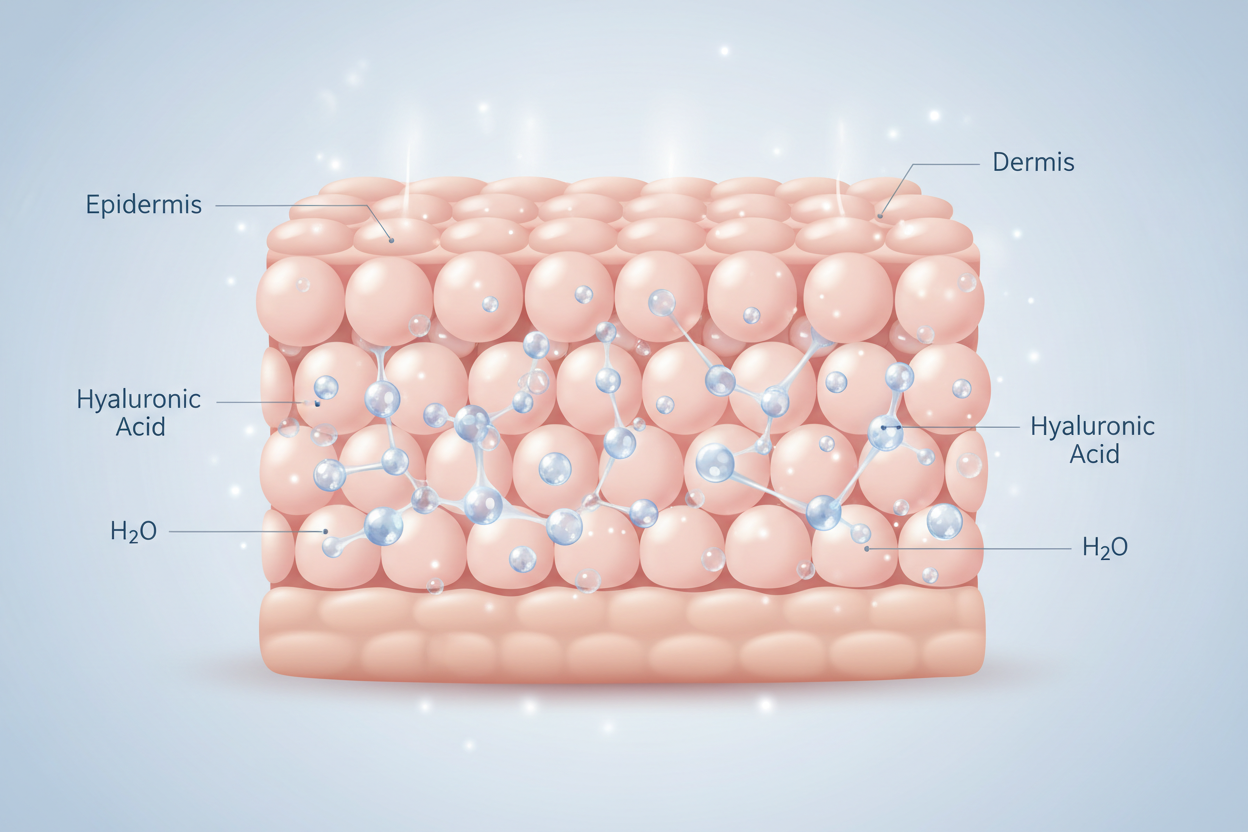
Scientifically speaking, HA is anionic (negatively charged) and highly hydrophilic (water-loving). This structure allows a single molecule of hyaluronic acid to hold up to 1,000 times its weight in water. Imagine a tiny sponge that can expand massively when it touches water—that is essentially what HA does within the layers of your skin. It draws moisture from the environment and the deeper layers of your dermis to the surface, creating a plumping effect.
When applied topically, hyaluronic acid doesn't just sit on top of your face; it actively works to improve your skin's health.
The most obvious benefit is hydration. By pulling water into the epidermis (the top layer of skin), HA ensures that your skin cells are fully hydrated. This leads to that "dewy" look that is so coveted in modern skincare.
Your skin has a natural barrier that protects it from external aggressors like pollution and UV rays. As we age, this barrier can weaken. Hyaluronic acid helps to fortify this barrier by keeping the environment rich in moisture, which is essential for healthy cell function. A stronger barrier means your skin is better equipped to defend itself.
Dehydrated skin often emphasizes fine lines and wrinkles. Think of a grape versus a raisin; the grape is plump and smooth because it is full of water. When you flood your skin with hydration using HA, you "plump" up those cells, which can visually reduce the appearance of fine lines and make the skin texture feel smoother.
One of the reasons HA is so beloved is its versatility. It is generally safe and effective for almost everyone, but here is how it helps specific skin types:
Dry Skin: This is the most obvious candidate. HA provides the critical moisture surge dry skin lacks, alleviating tightness and flaking.
Oily Skin: Many people with oily skin fear hydration, thinking it will make them oilier. However, oily skin is often actually dehydrated (lacking water, not oil). HA provides lightweight hydration without clogging pores, which can actually help regulate oil production.
Sensitive Skin: Because HA is naturally found in the body, it is non-irritating and incredibly gentle, making it perfect for those with reactive or sensitive skin.
Aging Skin: As we age, our natural HA levels drop significantly. Replenishing this topically helps restore volume and elasticity that is lost over time.
Using hyaluronic acid seems simple, but there is a "right" way to do it to avoid drying out your skin.
This is the most critical step. Remember, HA is a moisture magnet. If you apply it to dry skin in a dry climate, it may actually pull moisture out of your skin into the air. To prevent this, always apply your HA serum to damp skin immediately after cleansing or misting. This gives the molecule plenty of water to grab onto.
Cleanse: Start with a gentle cleanser.
Mist/Tone: Leave your face damp.
Treat: Apply your Hyaluronic Acid serum.
Seal: Immediately follow up with an occlusive moisturizer or facial oil. This "locks in" the hydration so it doesn't evaporate.
Myth 1: The higher the percentage, the better.
Not necessarily. Extremely high concentrations (above 2%) can sometimes cause irritation or be too thick to absorb properly. A concentration between 1% and 2% is usually the sweet spot for effectiveness.
Myth 2: All Hyaluronic Acid is the same.
False. HA comes in different molecular weights.
High molecular weight: Sits on the surface for instant smoothing and hydration.
Low molecular weight: Penetrates deeper into the skin for long-term hydration and repair.
The best products often combine different molecular weights for multi-level hydration.
Hyaluronic acid is widely considered safe. However, in very rare cases, people may experience:
Redness or irritation (often due to other ingredients in the product, like preservatives).
Dryness, if applied incorrectly (to dry skin without sealing it in).
Always patch-test a new product on your inner arm before applying it to your face.
Ready to add this hydration hero to your routine? Here are our top recommendations available right here at Mistic Health:
Mistic Hydro-Boost Serum: A classic, lightweight serum featuring multi-molecular weight HA for deep and surface hydration. Perfect for all skin types.
Dewy Days Gel Cream: Ideally suited for oily or combo skin, this moisturizer combines HA with aloe vera for a soothing, non-greasy finish.
Night Repair Plumping Mask: An overnight treatment rich in HA and ceramides to restore your barrier while you sleep.
Hyaluronic acid is more than just a trend; it is a fundamental component of healthy, hydrated skin. By understanding the science behind it and using it correctly, you can achieve a softer, smoother, and more radiant complexion.